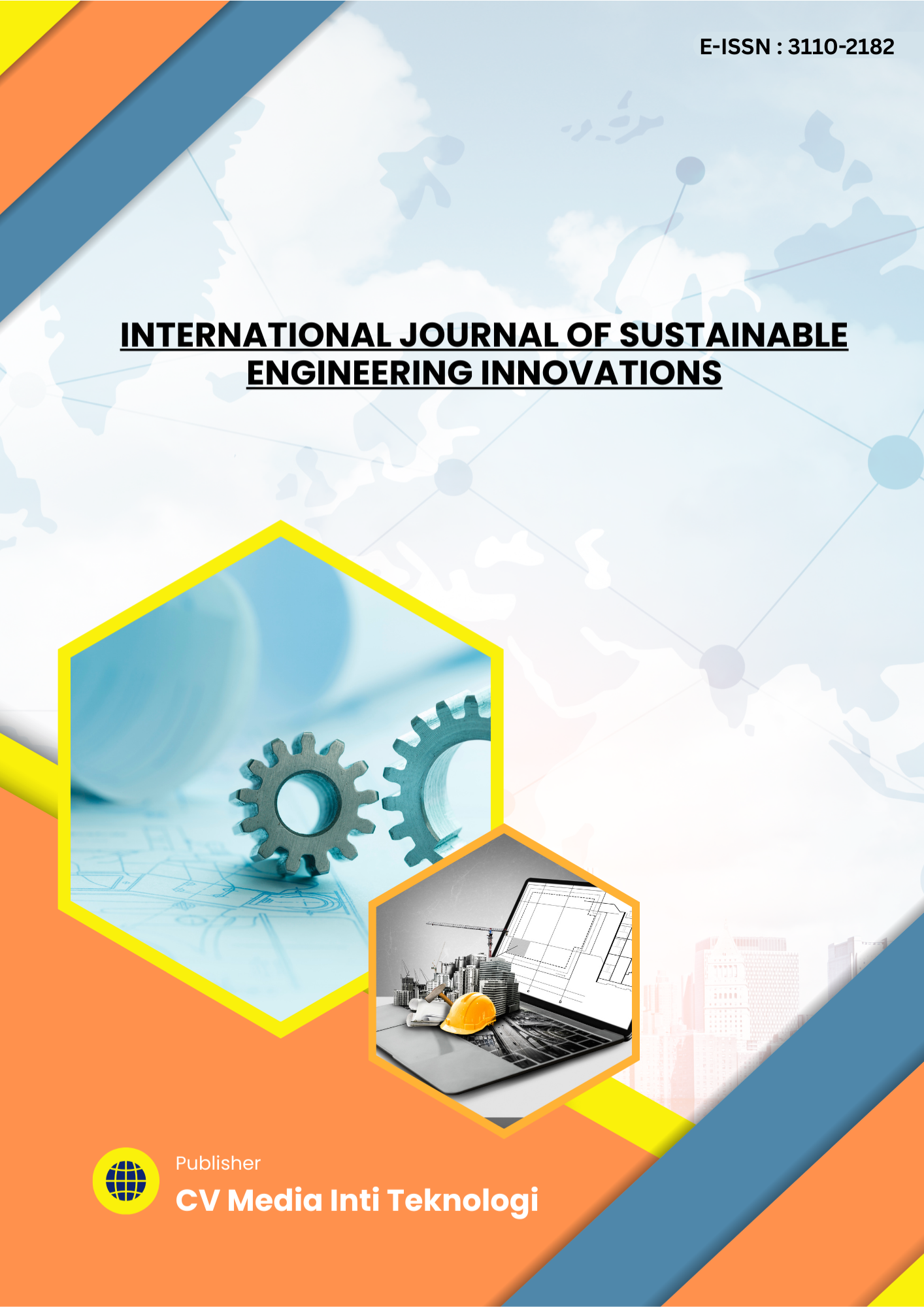
About the Journal

FIELD DETAILS
E-ISSN : 3110-218
Abbreviation : Int. J. Sustain. Eng. Innov..
DOI Prefix : 10.58723 by
Publisher : CV Media Inti Teknologi (Gomit.id)
Editor in Chief : Dr. Tri Basuki Kurniawan
SINTA  : On Progress
Frequency : 2 issues per year
Focus & Scope
  • Engineering Science
  • Renewable Energy Systems
  • Sustainable Materials and Construction
  • Waste Management and Resource Recovery
  • Sustainable Engineering Education and Practice
  • Economics and Finance of Sustainable Engineering
    etc.
OAI Address https://e-journal.gomit.id/ijsei/index/oai 
Citation Analysis


 The International Journal of Sustainable Engineering Innovations (IJSEI) is a peer-reviewed, open-access journal dedicated to publishing cutting-edge research and innovative advancements in the broad field of sustainable engineering. IJSEI serves as a vital platform for researchers, engineers, scientists, and policymakers to disseminate their findings and contribute to the development of environmentally, economically, and socially responsible engineering solutions.


Subject Area

The International Journal of Sustainable Engineering Innovations (IJSEI) covers a broad range of topics within sustainable engineering, emphasizing the integration of innovation and sustainability in engineering systems. The journal publishes original research, reviews, and case studies that contribute to the advancement of sustainable engineering practices across various domains. The scope of the journal includes, but is not limited to, the following subject areas:

  1. Renewable Energy Systems:

    • Innovations in renewable energy technologies, including solar, wind, bioenergy, hydroelectric, and geothermal systems.

    • Energy storage solutions, smart grids, and energy efficiency improvements.

    • Integration of renewable energy in existing energy infrastructure and systems.

    • Policy and regulatory frameworks for renewable energy development and adoption.

  2. Sustainable Materials and Construction:

    • Development of sustainable construction materials, including eco-friendly, recycled, and renewable materials.

    • Design and implementation of sustainable construction practices and green building technologies.

    • Lifecycle analysis and environmental impact assessment of construction materials and techniques.

    • Innovations in sustainable building design, including energy-efficient and low-carbon construction methods.

  3. Waste Management and Resource Recovery:

    • Strategies and technologies for waste reduction, recycling, and resource recovery.

    • Circular economy approaches in waste management, including product lifecycle extension and upcycling.

    • Waste-to-energy technologies and the integration of waste management into urban infrastructure.

    • Sustainable waste management practices in industries, municipalities, and rural settings.

  4. Sustainable Engineering Education and Practice:

    • Development and implementation of sustainable engineering education curricula.

    • Case studies and innovations in sustainable engineering teaching practices.

    • Interdisciplinary approaches to sustainable engineering in academic, research, and professional settings.

    • The role of engineering education in fostering sustainability awareness and practices.

  5. Economics and Finance of Sustainable Engineering:

    • Economic analysis of sustainable engineering technologies, including cost-benefit analysis and lifecycle cost assessments.

    • Financial models and funding mechanisms for sustainable engineering projects.

    • Impact of sustainable engineering practices on economic growth, job creation, and environmental resilience.

    • Policy and financial frameworks supporting the transition to sustainable engineering in both developed and developing regions.

Current Issue

ISSN
3110-2182 (online)
Published:
2026-01-27

in Press

Indexer Sites